

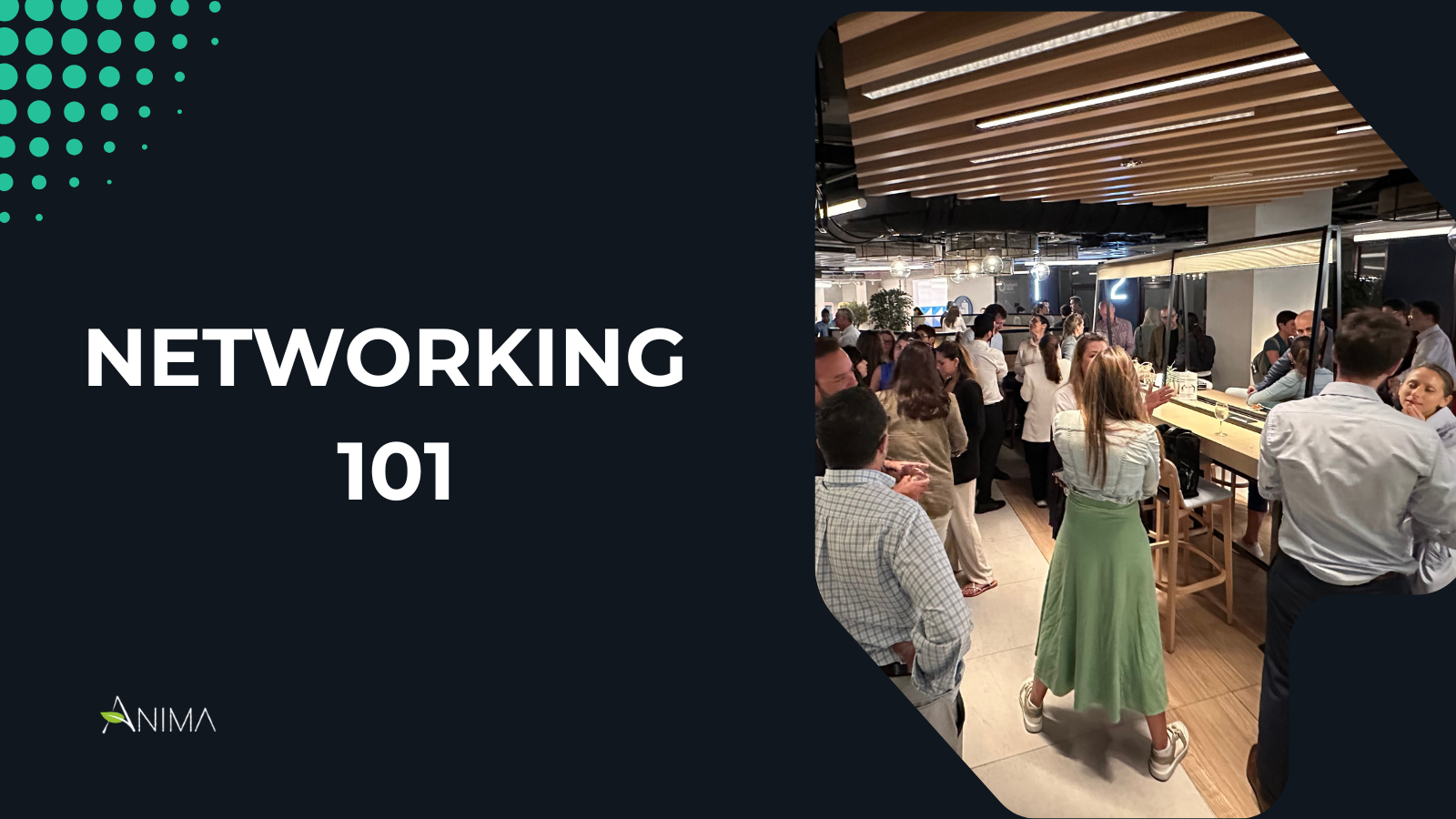
Executive Summary: The Core Points
Handshake culture, not digital traffic, is still how most founders and SME owners land their first investors, customers, and hires. It isn't the old way of doing business. It's still the primary one.
The golden rule underneath all of it: whoever you're meeting matters more to you than you do to them. Holding that asymmetry consciously is what keeps you humble enough to treat anyone as worth talking to, not just the people who look useful on paper.
At events, expect several interactions in a finite window. Research who's attending beforehand, and walk in with a goal defined by what you are there to do, not a list of what you're not there to do. None of this comes naturally at first. It's a practiced skill, not a fixed trait.
Networking is not meeting as many people as possible, as fast as possible. It's interacting specifically with people you can talk business with, and plenty of people, even ones you see often, simply aren't that. That's fine. Volume was never the goal.
When the person you need is genuinely outside your network (the "researcher in Antarctica" problem), referrals are the way in. Someone introduces you either because they're generous, or because you barter for it, with a sincere "I owe you one" as the default currency. If someone declines to introduce you, don't push. It doesn't work. Find another path to the same person, or come back later when it's a lighter ask.
Shallow connections aren't the mistake. Trying to keep everyone equally close is. Trust your own quick judgment on who's worth investing in further, and who's simply good to have on file.
Before You're in the Room
Why Networking Is Different When You're Nobody Yet
The advice out there assumes you've already made it. "Just be yourself." "Provide value." "Follow up." All true, all useless, because it skips the part where you're standing in a room and the only thing anyone knows about you is your name tag.
Here's the actual problem: normally, a brand does half your talking for you. Someone hears "I'm from [Company You've Heard Of]" and their brain fills in a dozen blanks: credibility, stability, this person probably isn't wasting my time. When you're pre-brand, none of that fires. You get maybe ninety seconds of someone's attention, and you have to earn every one of those blanks yourself, live, with no safety net.
I used to over-prepare for this. I'd rehearse the "who I am" part like it was a pitch competition, and every time, it landed flat, because nobody was actually asking who I was. They were asking, without saying it out loud, why should I keep listening to you. Those are different questions, and only one of them has a good answer that starts with your job title.
So this isn't a post about tricks for working a room. It's about what to say and do when you don't have a brand doing the work for you: for the three groups that matter most early on: the people who might fund you, the people who might buy from you, and the people who might bet their career on joining you.
Handshake Culture Still Runs the World
Most networking advice is written for a world of inbound funnels and digital traffic, but that's not actually how most founders and SME owners get their first investors, customers, or hires. Those still happen in a room, over a call, through someone who knows someone. Handshake culture isn't the old way of doing business. For early-stage founders, it's still the primary way.
This matters because it changes where you should be spending your energy. If you're pouring effort into a content funnel while your actual first ten customers are one warm introduction away, you're optimizing for a channel that won't pay off until much later, while ignoring the one that's already available to you. Digital traffic is a scale mechanism. Handshakes are a trust mechanism. Early on, you need trust far more than you need scale.
The Golden Rule: They Matter More to You Than You Do to Them
This one's less a tactic and more a posture, and it's worth keeping deliberately, because it's easy to lose once you start needing things from people. The rule is simple: assume the person in front of you matters more to you than you matter to them, not the other way around.
It sounds self-deprecating, but it's actually just accurate math. You're the one who needs the intro, the deal, the hire, the customer. They're usually fine either way. Holding that asymmetry consciously does something useful: it keeps you humble enough to treat everyone as worth talking to, not just the people who look useful on paper. The person who seems irrelevant to your immediate goal today is sometimes the referral that matters in eight months, and you won't know which conversations those are in advance.
I keep this rule mostly to correct my own instincts, honestly. It's easy to unconsciously ration your attention toward whoever looks most "valuable" in a room, and that instinct is usually wrong about who turns out to matter.
Getting Ready for an Event
Events compress a lot of opportunity into a little time, which is both the appeal and the trap, and most of the work that makes them pay off happens before you walk in.
Research who's attending before you go. Most events publish a guest list, speaker list, or attendee app. Spend twenty minutes beforehand identifying three to five people you actually want to talk to and why. Walking in with zero targets means you'll default to whoever's standing near the coffee, which is a strategy, just not a very good one.
Have a primary goal for being there, and define it as something, not as an absence of something. "I'm not here to pitch investors, I'm not trying to sell, I'm just here to learn" tells you nothing to actually do. "I'm here to find two people running SMEs who might pilot the research process with me" tells you exactly who to look for and how to know if the event worked. A goal built out of what you're not doing gives you no direction. A goal built out of what you are doing gives you a filter for every conversation in the room.
Practice makes the soft skills less effortful. The self-conscious inner monologue (should I interrupt this group, is this a good time, did that land) never fully disappears, but it gets quieter with repetition. Nobody starts good at reading a room. It's a rep-based skill like any other, which is oddly reassuring once you accept it.
Research who's attending
Name 3 to 5 people you actually want to talk to, and why, before you walk in
Set a goal built from what you're doing
Not "I'm not here to pitch," but something concrete, like "find two SME owners to pilot with"
Expect the nerves, not their absence
The self-conscious inner monologue gets quieter with reps. It doesn't vanish
In the Room
Lead With the Problem, Not the Pitch
Most founders introduce themselves backwards. They open with what they built, then wait for the other person to reverse-engineer why they should care. It's exhausting to listen to, and it puts the entire burden of relevance on the listener.
Flip it. Open with the problem you're obsessed with, not the solution you're selling. "How come PowerPoint presentations are so dense? How does anyone sit through those?" lands completely differently than "I build keynote presentations that have animations to explain data better." One is a story someone can react to. The other is a category they have to place you in before they can respond at all.
I noticed this the hard way: I'd say the product name and watch people's eyes do the polite thing where they're still looking at you but already composing their next sentence. Then I tried leading with "most businesses that fail aren't bad ideas, they're untested assumptions wearing a business plan," and suddenly people asked follow-up questions instead of nodding.
The test is simple: if your opener requires them to already understand your industry to find it interesting, it's a pitch. If a stranger with zero context could ask "wait, really?", it's a problem, and problems are what get remembered.
By Who You're Talking To
Once you're in front of someone, the game shifts depending on what they're actually there to evaluate, and I didn't get that for longer than I'd like to admit. I used to treat every conversation like the same pitch with a different logo swapped in. It doesn't work, because the person across from you isn't judging the same thing in each case.
Investors
Really evaluating
Whether you're worth watching, not the product itself
Trust signal
Specific uncertainty over vague confidence
First customers
Really evaluating
A bet on you following through, not the product as it is today
Trust signal
Showing up, saying "not yet" plainly
First hires
Really evaluating
Whether you specifically hold up when things get hard
Trust signal
Naming the risk before they ask
Investors. Here's what took me a while to sit with: investors aren't evaluating your product in that first conversation. They can't. There's not enough of it yet. They're evaluating whether you're a good bet to keep watching, which is a much more personal, much less comfortable thing to be assessed on. Cold outreach converts far worse than warm introductions, because someone else is lending you their credibility for the length of an email, and you can't fake having borrowed it. I used to think angel communities and demo days were about the pitch itself. They're really about proximity, about being in the rooms where a warm intro can happen at all. Without a track record to point to, investors lean hard on a few proxies: how precisely you can describe the problem, whether your plan changed because of real evidence or just optimism, whether you actually know what you don't know yet. Vague confidence reads as risk, even when it doesn't feel like it in the moment. Specific uncertainty (here's what we've validated, here's what we haven't) reads as competence, even though it feels like the less impressive thing to say.
I still catch myself drafting the "just wanted to follow up" email and then deleting it, because I know exactly what it's asking them to do: decide, out loud, before they're ready. So I make myself wait until there's something worth telling them instead. It's a small discipline, but it's the one I break most easily when I'm anxious.
First customers. This one fooled me for a while, because it looks like a normal sale from the outside and isn't. Early on, almost nobody is buying your product as it exists today. They're buying a bet on you personally following through on what it becomes, which is a strange thing to realize you're actually selling. Founder-led sales is the unfair advantage you actually have here: no support team, no brand reputation, no case studies, but a real, unscripted conversation about their actual problem, and people can feel the difference. In communities, I've noticed the founders people end up buying from are almost always the ones who were already useful for weeks before they mentioned what they built. The help came first, not as a lead-in. A customer with no case studies to check isn't quietly asking "has this worked for other people yet," because they can't answer that. They're asking something closer to "do I trust this specific person not to waste my time and money," and that gets built through small, almost boring things: showing up when you said you would, being straight about what doesn't work yet.
I've caught myself inflating a "yes, we can do that" into something closer to a "we could probably figure that out," because saying "not yet" out loud felt like losing the sale in real time. It never actually cost me the customer when I said it plainly. It cost me trust the one time I didn't, and that one stuck with me longer.
First hires. This might be the hardest sell of the three, and I think it's because you're not asking for money or an hour of someone's time. You're asking them to bet their career, their income, sometimes their identity, on a company that doesn't exist yet in any way they can verify. Nobody joins a two-person company because of the market opportunity slide, whatever it says. They join because they believe you specifically will hold up when things get hard, which means the interview is really a character read disguised as a pitch. Your existing network (former colleagues, people who've watched you handle a hard situation well) is disproportionately more likely to take that leap than a stranger from a job posting, because they're evaluating a track record they already have on you, not a slide deck. I've learned that naming the risk directly (what could go wrong, what the runway actually looks like) reads as someone who'll be straight with them later, which is exactly what they're quietly trying to figure out now, whether they say so or not.
I remember rehearsing all the upside of a role for a first hire and quietly skipping past the "here's what happens if we run out of money in eight months" part, because it felt like sabotaging my own pitch to bring it up first. She asked about it anyway. And it wasn't the risk itself that made her hesitate. It was that I hadn't brought it up. That's the part I keep relearning.
Working a Finite Window
Unlike a slow-building relationship, an event gives you maybe two hours and a room full of people you'll mostly never be in the same place with again. That changes the math in a way I didn't fully register at my first few events. I'd find one good conversation and just stay in it, relieved to not be doing the awkward part anymore. Which felt nice in the moment and cost me the other four people I'd actually come to meet.
It's less about depth in the moment than it is about identifying, quickly and a little uncomfortably, who's worth a real follow-up afterward. You get multiple interactions in a finite window. Treat it that way, and don't mistake a good five-minute conversation for the whole relationship. That part comes later. The follow-up is where the relationship actually gets built; the room is just where it gets started.
After the Room
Follow-Up and Staying in Someone's Orbit
The unglamorous truth about early networking is that most of the value isn't in the first conversation. It's in still being there, credibly, six months later when circumstances have changed.
Build a follow-up system before you think you need one. A spreadsheet with names, context, and "next touch" dates is enough. The goal isn't sophistication, it's not letting good conversations quietly evaporate because you had no system to remember them.
Match the cadence to the relationship, not to your anxiety. A promising investor conversation might warrant a check-in every few weeks with a real update. A first hire you're courting might warrant a genuine, no-agenda catch-up once a month. The mistake isn't reaching out too little. It's reaching out on a schedule that serves your nerves instead of their actual decision timeline.
Every touchpoint should leave them slightly more informed, not just slightly more contacted. If you can't think of anything new to say, that's usually a sign it's too early to reach out again, not a reason to send a placeholder message anyway.
I used to feel like silence after a good conversation meant I was losing momentum, so I'd send something just to fill it. Every time, it was a nothing message, and I could tell they could tell. Now I wait until I actually have something, even if that means waiting longer than feels comfortable.
The Tactics That Compound Over Time
Strip away the audience and it's really a handful of things doing the actual work in every relationship you're maintaining. None of them are clever. That's sort of the point, and it took me a while to trust that.
Give before you ask. Not as a manipulation tactic, I don't think it works if you're running it as one, but genuinely help, answer, connect people, share what you know before you need anything back. It's the only way to demonstrate value before you have any proof of it, and I notice I still feel a flicker of "is this a waste of time if nothing comes of it" every time I do it anyway, which is probably a sign I haven't fully internalized this one yet.
Specificity beats vagueness, every time, and it costs you something to practice, because vague is safer. "We're seeing strong early traction" tells someone nothing and quietly signals you might be hiding the number. "Eleven of our first fourteen conversations turned into paying pilots" tells them everything, including that you're someone who tracks reality closely enough to know it. I used to reach for the vague version instinctively, because a number that isn't big yet feels like an admission. It isn't. It's just true, and true reads better than impressive.
Follow-through is the actual reputation engine, and it's the least glamorous one on this list. Long before you have references, the people you've interacted with are quietly building a private verdict on you based on whether you did the small things you said you'd do: sent the doc, made the intro, replied when you said you would. That verdict spreads, unprompted, and it compounds faster than almost anything else you can do early on. I think about this every time I'm tempted to let a small promise slide because something bigger is on fire. The small promise is usually the thing being watched.
And small proof points stand in for brand when you don't have one yet. A screenshot of real usage, a specific quote from an early customer, a number that's small but real: these do the credibility work a logo would otherwise do for you. They don't need to be impressive. They need to be true, and I had to get over feeling embarrassed about how small mine were for a while before I started using them at all.
The Navigation Situation: Trading Your Way to Who You Need
Sometimes the person you need to talk to isn't one or two steps away. They're genuinely outside anything resembling your network. Think the equivalent of needing to reach a researcher stationed in Antarctica: not impossible, just not reachable through any normal path.
Worth being clear about what networking actually means here, because it's not what it sounds like on the surface. Networking isn't meeting as many people as possible as fast as possible. It's interacting with people who can meaningfully discuss business with you, and it's worth remembering plenty of people, even ones you meet often, simply aren't that, and that's fine. The goal was never volume.
When you do need to reach someone genuinely outside your reach, referrals are the most reliable, socially acceptable way in. That works one of two ways: someone in the chain is generous enough to make the introduction for free, or you barter for it. The barter version is closer to the old story of trading a paperclip step by step up to a house. Each trade is small and reasonable on its own, but the chain gets you somewhere you couldn't have jumped to directly. My default barter currency is a simple, direct "I owe you one": a real, open-ended favor, not something formal or scripted.
If someone declines to make the connection, don't push. I've tested pushing past a soft no, and it doesn't work. It just spends trust you'll want later. Better to look for an alternate path to the same person, or come back to the same person at a different, less loaded moment.
Other Situations Worth Naming
A few more contexts follow the same underlying logic, adapted to their format. I keep rediscovering this same pattern in new settings, which probably says something about how few actual patterns there are.
- Online webmeets and virtual events. The chat and breakout rooms are your equivalent of "who's standing near the coffee," and I ignored them for longer than I should have because typing in a chat window felt lower-stakes and therefore lower-value, which turned out to be backwards. Send one specific, non-generic message during the event itself, rather than waiting to connect after, when you're just another name in a list of forty people who all watched the same webinar.
- Communities and forums. These work like slow-motion events: "research who's attending" becomes "read a few weeks of history before posting," so your first contribution shows you actually understand the space instead of announcing yourself cold. I still cringe a little rereading my first posts in a couple of these. You can tell exactly which ones I wrote before I'd done the reading.
- Alumni and past-colleague networks. Chronically underused because it doesn't feel like "networking." It feels like just catching up, which is precisely why it works. There's no cold-start trust problem to solve, only a dormant relationship to reactivate, and I think I avoided it early on because it felt like it didn't count. It counts.
You
Not connected
Contact A
Knows B
Contact B
Knows target
Target person
Genuinely out of reach
What Trips People Up
Common Mistakes Founders Make Networking Solo
A few patterns show up constantly, and I've caught myself in every single one of them at some point, which is mostly why I trust this list.
Overselling to compensate for having no brand. Because there's no logo doing reassurance work for you, it's tempting to talk yourself up to fill the gap. I did this reflexively for the first year, without really noticing I was doing it. It usually backfires. People who can't verify your claims tend to discount confident claims more, not less, because confidence is the one thing that costs nothing to fake, and on some level everyone knows that.
Networking too broadly instead of targeted. Collecting contacts feels like progress, there's a specific little dopamine hit to a growing list, but a hundred shallow connections are worth less than ten people who actually understand what you're building and could plausibly help. I think breadth is sometimes just a more comfortable way of avoiding the harder work of going deep with the few people who matter. Though I'll say, there's nothing wrong with shallow connections themselves. Trying to keep everyone equally close is the actual mistake, not meeting people you'll only ever know a little. We're better at this judgment than we give ourselves credit for: most people can size up, within a few moments of a conversation, who's worth investing more in and who's just good to have on file for later, regardless of how the interaction itself went. Trust that instinct instead of trying to overrule it with effort.
Treating every contact as transactional. If every conversation has a visible ask attached, people start pre-declining before you even get to it, and I don't think they're being unkind when they do. I've done the same thing to other people's asks.
Skipping the follow-up because the first meeting felt good. This is the one I still do. A great conversation with no follow-up is functionally the same as no conversation. The goodwill doesn't store itself, it needs the next touch to become anything real, and it's strange how easy that is to know and still not act on.
Your Network Is Your Brand Until You Have One
Here's the reframe worth sitting with: you're not networking around the lack of a brand. The network you build now (carefully, specifically, without shortcuts) is the brand, before the real one exists. Every investor who remembers your name, every early customer who trusted you before they had to, every first hire who bet on you personally. That's not networking in service of the company. For a while, it is the company, running on nothing but earned trust and follow-through.
It won't feel efficient. It'll feel like a lot of ninety-second conversations where you're doing all the work of being believable, one person at a time. That's not a phase to rush through. It's the only way this part gets built, and it's the part that, later, no amount of brand will ever fully replace.
Overselling to compensate for no brand
Confidence is the one thing that costs nothing to fake, people discount it
Networking broadly instead of targeted
Ten people who understand what you're building beat a hundred shallow contacts
Treating every contact as transactional
A visible ask attached to every conversation makes people pre-decline
Skipping follow-up because the meeting felt good
A great conversation with no follow-up is functionally the same as no conversation
A Note From Anima
This is the same kind of thinking we bring to client work: business model innovation, and the research behind it, for founders and SME owners working through problems like the ones above. If something here got you thinking and you'd like a second opinion, reach out. We only charge once there's real work to do, not for the conversation that gets you there.